Friday Open Thread ~ week in review edition
Submitted by phillybluesfan on Fri, 05/14/2021 - 5:00am


Journalist and anti-war activist David Harris spoke to Robert Scheer about his resistance to America’s genocide in Vietnam and his education in federal prison
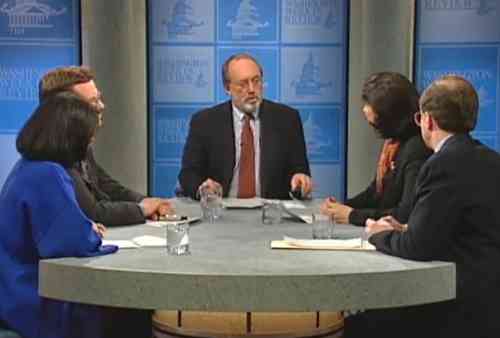
I believe it was the great Paul Neuman who used to describe Washington Week In Review as, "riveting stuff." Sad to say the luster has come off since the days of Ken Bodie as moderator.
It has come to pass that, with too few exceptions, comedians and cartoonists are now our best journalists. Friday Open Thread hopes to walk us through a review of last week's most memorable events ... as illuminated through editorial cartoons and non tradional media.
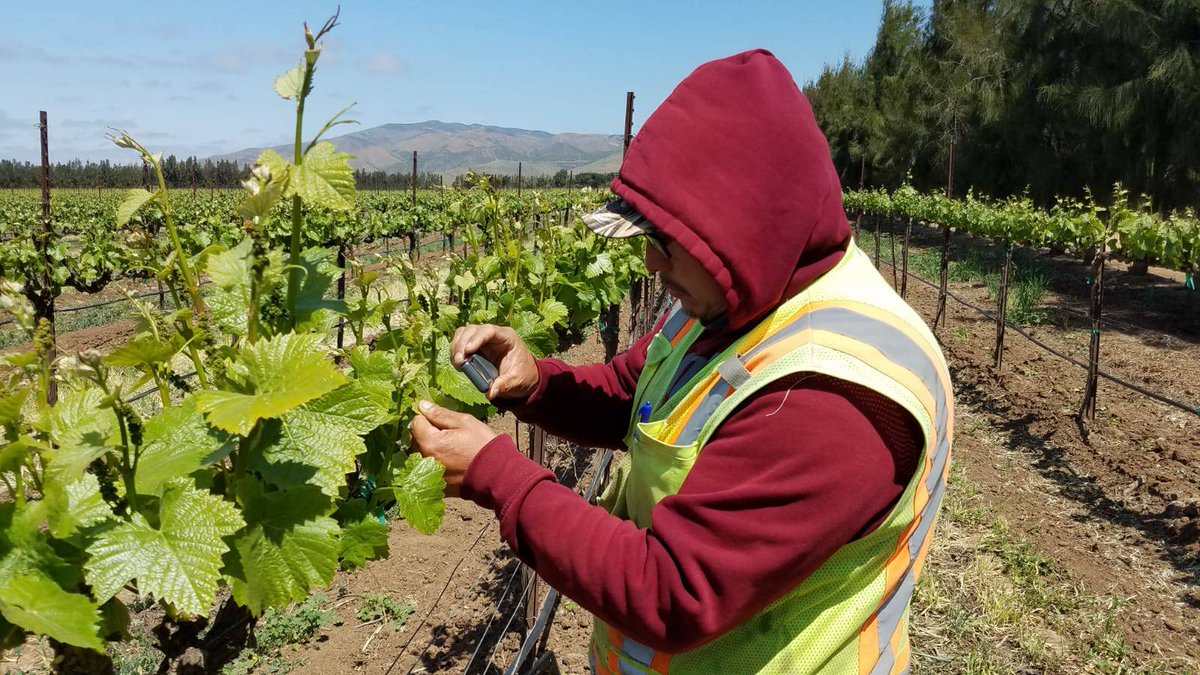
Meet Miguel. He is a farm worker in Soledad CA. Here he uses a special magnifying glass to search for tiny spiders that can damage the grapes, destroy the leaves and suck the juice from the cane. Thankfully on this day the wine grapes were free from any pests. #WeFeedYou
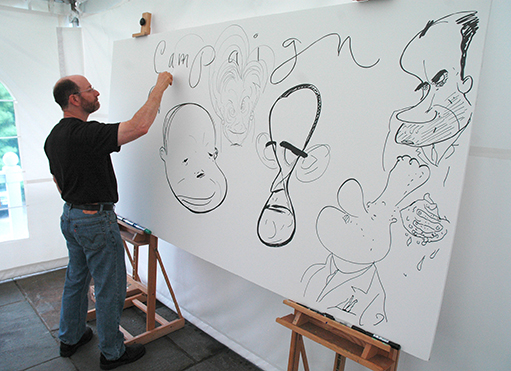
Steve Brodner (born October 19, 1954, in Brooklyn, New York) is a satirical illustrator and caricaturist working for publications in the US since the 1970s. He is accepted in the fields of journalism and the graphic arts as a master of the editorial idiom. Currently a regular contributor to GQ, The Nation, Newsweek, The Washington Post, and The Los Angeles Times, Brodner's art journalism has appeared in most major magazines and newspapers in the United States, such as Rolling Stone, The New York Times, The New Yorker, Esquire, Time, Playboy, Mother Jones, Harper's, and The Atlantic. His work, first widely seen exposing and attacking Reagan-era scandals, is credited with helping spearhead the 1980s revival of pointed and entertaining graphic commentary in the US. He is currently working on a book about the presidents of the United States.

As an over 65 resident of Jefferson County, I have the perk of being able take courses at University of Louisville .... for free. I do have the expense of having to purchase any required books. But there is no pressure to perform, beyond participating as fully as I can out of respect to the professor and tuition paying fellow students, and taking only one class allows me the luxury of time.
My next challenge will be LITERATURE AND THE ENVIRONMENT. This distance learning class allows me to avoid crowded indoor rooms during Covid-19 times.
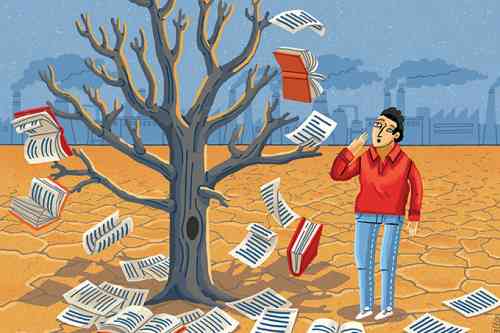
The texts for my latest class have arrived. I look forward to learning from them and writing about them.
Krystal Ball, cohost of Rising on Hill TV, and Kyle Kulinski, host of Secular Talk, dive into politics, philosophy and random BS with people they like.

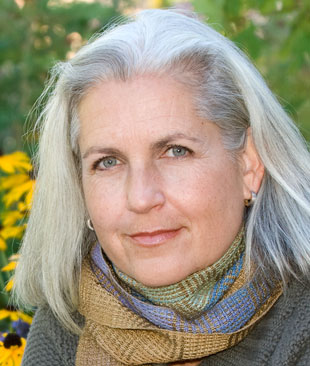
Terry Tempest Williams has been called "a citizen writer" — one who speaks out eloquently on behalf of an ethical stance toward life. She has worked as the Naturalist-in-Residence at the Utah Museum of Natural History and remains a passionate advocate for the preservation of the American Western wilderness. In her essays and books, she shows us how environmental issues are social issues that ultimately become matters of justice.
Williams, like her writing, cannot be categorized. She has served time in jail for acts of civil disobedience, testified before Congress on women's health issues, been a guest at the White House, has camped in the remote regions of Utah and Alaska wildernesses, and worked as "a barefoot artist" in Rwanda.
[video:https://vimeo.com/263413846]
In 2006, Ms. Williams received the Robert Marshall Award from The Wilderness Society, their highest honor given to an American citizen. She also received the Distinguished Achievement Award from the Western American Literature Association and the Wallace Stegner Award given by The Center for the American West. She is the recipient of a Lannan Literary Fellowship and a John Simon Guggenheim Fellowship in creative nonfiction. Utne Reader called her "a person who could change your life."
The Annie Clark Tanner Scholar in Environmental Humanities at the University of Utah, she has published in the New Yorker, The New York Times, Orion Magazine, and numerous anthologies worldwide as a crucial voice for ecological consciousness and social change. In 2009, she was featured in Ken Burns' PBS series on the national parks. She divides her time between Castle Valley, Utah, and Moose, Wyoming.
Police Accountability Report, hosted by Taya Graham and Stephen Janis, is a weekly show that seeks to expose and hold to account one of the most powerful institutions in this country—the police.
The show shines a critical light on all facets of American policing, exploring the systemic and political imperatives that put law enforcement at odds with the communities they purport to serve.
The Man with No Name (Italian: Uomo senza nome) is
the antihero character portrayed by Clint Eastwood in
Sergio Leone's "Dollars Trilogy" of Spaghetti Western
films: A Fistful of Dollars (1964), For a Few Dollars More
(1965), and The Good, the Bad and the Ugly (1966). He is
recognizable by his poncho, brown hat, tan cowboy boots,
fondness for cigarillos, and the fact that he rarely talks.While the character is universally known as "the Man with
No Name", he was called "Joe" by another character, and
listed in the credits as such, in the first film, and given
nicknames by other characters in the other two such as
"Blondie."Despite this, he never refers to himself with
any moniker, and, when asked for a name in the third
film, is reluctant to answer as the question is dismissed.When Clint Eastwood was honored with the American
Film Institute's Lifetime Achievement Award in 1996, Jim
Carrey gave the introductory speech and said: "'The Man
with No Name' had no name, so we could fill in our
own."In 2008, Empire chose the Man with No Name as
the 43rd greatest movie character of all time.
Kent Nerburn is an author, sculptor, and educator who has been deeply involved in Native American issues and education. He developed and directed an award-winning oral history project on the Red Lake Ojibwe reservation in Northern Minnesota. In addition to being a program evaluator for the Minnesota Humanities Commission and serving on their selection board, he has served as a consultant in curriculum development for the American Indian Institute in Norman, Oklahoma, and has been a presenter before various groups, including the National Indian Education Association, and the President's blue ribbon panel on Indian Education.
[video:https://vimeo.com/ondemand/nwnd/397754396]
Nerburn has served as project director for two books of oral history — To Walk the Red Road and We Choose to Remember. He has also edited three highly acclaimed books on Native American subjects: Native American Wisdom, The Wisdom of the Great Chiefs, and The Soul of An Indian. He is the author of a series of sterling books of essays and personal stories that reveal the deep meaning to be found in family, art, nature, and everyday spirituality.
Kent Nerburn holds a Ph.D. in both Theology and Art, and lives with his family in northern Minnesota.